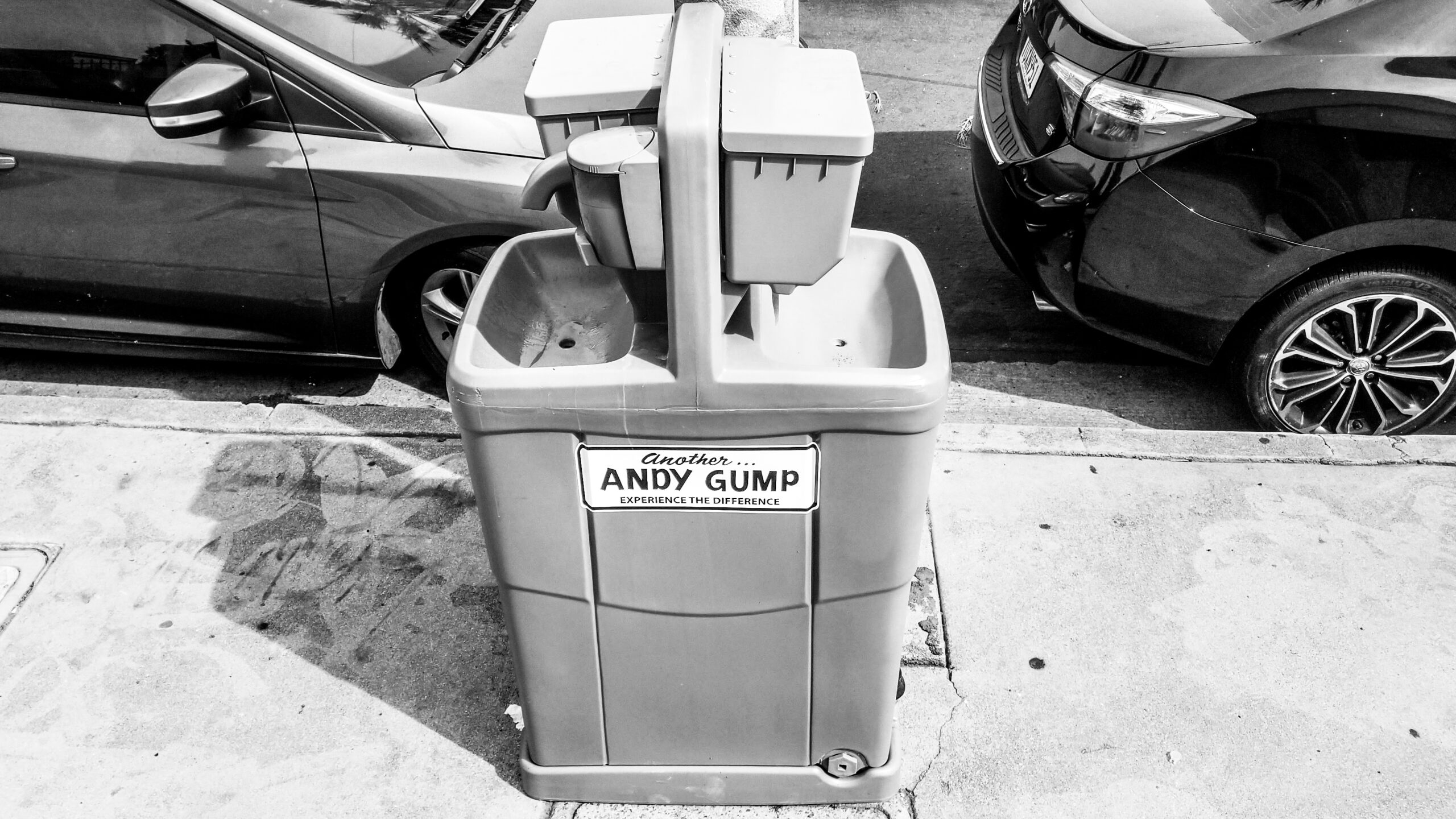
[dropcap size=big]O[/dropcap]n Wednesday, L.A. City Councilmember Mark Ridley-Thomas filed a motion to extend the program that brought hundreds of hygiene stations to homeless encampments during the pandemic until the end of the year. This comes roughly a month after the city abruptly removed the units as COVID-19 cases began to surge again in Los Angeles. And roughly two months after a 16 month long L.A. TACO investigation found that vendors failed to service units consistently, despite collecting millions of dollars in payments.
“This pilot program ended on June 30, 2021. Given the increase in COVID-19 infections, however, additional funding is now required to keep the YMCA shower program and the portable hygiene station programs open for the remainder of the calendar year.” The motion reads.
A week earlier, the city council backed an ordinance supported by Ridley-Thomas that restricts encampments near homeless shelters, daycares, libraries, and other public facilities. Critics of the ordinance say it further criminalizes the unhoused and leaves them with very few options regarding where they can legally reside.
Ridley-Thomas’ most recent motion calls for more than $650,000 to fund 150 hygiene stations (down from a peak of more than 500 units) and a little more than half a million dollars for seven showers at YMCA facilities from August 15 through December 31. According to Ariana Drummond, a communications deputy for Ridley-Thomas, “each council office will work with the Mayor's Office of City Homeless Initiatives to prioritize sites.” Drummond told L.A. TACO in an email that each site will include one bathroom with a sink, one ADA-compliant restroom, and one handwashing station under the proposal.
“Public hygiene is public health is public safety, and with the proliferation of this Delta variant, ensuring access to basic personal hygiene for all Angelenos – critical at any time – is non-negotiable,” Councilmember Mike Bonin, a co-author of the motion, told L.A. TACO in a statement on Wednesday. “I’m thankful to Councilmember Ridley-Thomas for putting this motion forward, proud to have seconded it, and look forward to its swift passage.”
We need better street hygiene. The city shouldn’t remove any existing, functional sinks or toilets until we’ve approved & funded a better program. We need more restrooms, open 24/7, with staffing to make sure they remain clean. https://t.co/0n3fg7cHHf
— Mike Bonin (@mikebonin) July 14, 2021
After the pilot program ended in June, three councilmembers told L.A. TACO that the abrupt removal of hygiene stations blindsided them, and two councilmembers told us that they didn’t support the removal of units. “Our office was not made aware that hygiene stations were scheduled to be removed until the end of June. We are currently working to restore hygiene services in our district.” Councilmember Nithya Raman’s office told L.A. TACO on July 15.
“We need better street hygiene. The city shouldn’t remove any existing, functional sinks or toilets until we’ve approved & funded a better program,” Bonin said in a tweet a day earlier.
Moving forward, contractors will be required to submit “daily service reports of their efforts to clean and service all of the hygiene stations” to help ensure that units are maintained regularly this time around.
As units were being pulled from sidewalks in July, city officials told L.A. TACO that they were considering expanding its Mobile Pit Stop Program. This $6 million hygiene initiative provides 20 bathrooms (in addition to showers) that come with staff and daily servicing. But after our most recent reporting, they decided to change course again. “The recent uptick in cases led us to reevaluate our decision to remove all of the units as we explore an expansion of our PIT stop program,” Harrison Wollman, press secretary for L.A. Mayor Eric Garcetti, told L.A. TACO yesterday.
After seeing a decrease in COVID-19 cases among people experiencing homelessness after the deadly winter surge, the county has seen a recent spike in transmission. Last week new cases among people experiencing homelessness increased 21 percent. According to the health department, only about a third of unhoused residents county-wide are fully vaccinated.
Moving forward, contractors will be required to submit “daily service reports of their efforts to clean and service all of the hygiene stations” to help ensure that units are maintained regularly this time around. During our investigation, we found that vendors consistently failed to refill stations with soap, water, and paper towels as well as replace unusable equipment between March of last year and June of this year.
“How can people use the sink on the street if they're in jail for sleeping on the sidewalk?
Since the city began pulling hygiene stations in late June, unhoused residents and advocates have told L.A. TACO that tensions between the unhoused and business owners are again rising. “When we had porta-potties unhoused people got into fewer altercations with local business and restaurants because they don't have to ask for permission to use the restrooms,” Ndindi Kitonga, an organizer with a westside based mutual aid group called PUMA-LA that works with unhoused residents in Ridley-Thomas’ district, told L.A. TACO a couple of weeks after the pilot program ended in July.
“What's going to happen after December? More debate?” Tanya Myers, an unhoused resident that lives near a temporary shelter in the San Fernando Valley, asked yesterday. “The whole public needs some permanent restrooms and washing.” Last month Tanya told us that people who are seemingly housed also used the porta-potty that was near her but now that the unit is gone, people urinate near her tent. “[Hygiene stations] benefit everyone,” Tanya emphasized.
On Wednesday afternoon, housing advocates criticized Ridley-Thomas for supporting an ordinance (41.18) that they say further criminalizes the unhoused one week and then a motion that is supposed to help them the next. “How can people use the sink on the street if they're in jail for sleeping on the sidewalk? No, we did not forget that you authored 41.18,” Carla Orendorff with Street Watch LA told us.
“This is only to prove he's a good guy after facilitating the passage of 41.18. He can't have both,” Ian Carr, an organizer with POWER, said.
“My only question is: What do different hygiene stations do in the light of 41.18? If there are little to no spaces for unhoused folks, why introduce this? Why not denounce 41.18 and suggest a better solution?” Kitonga, the homeless advocate from Ridley-Thomas’ district, asked.
The motion will head to the Homeless & Poverty Committee before being presented to the full city council again for a final vote.
This is the fifth investigative article produced as a project for the USC Annenberg Center for Health Journalism’s 2020 Data Fellowship. Read the beginning of the series here.