

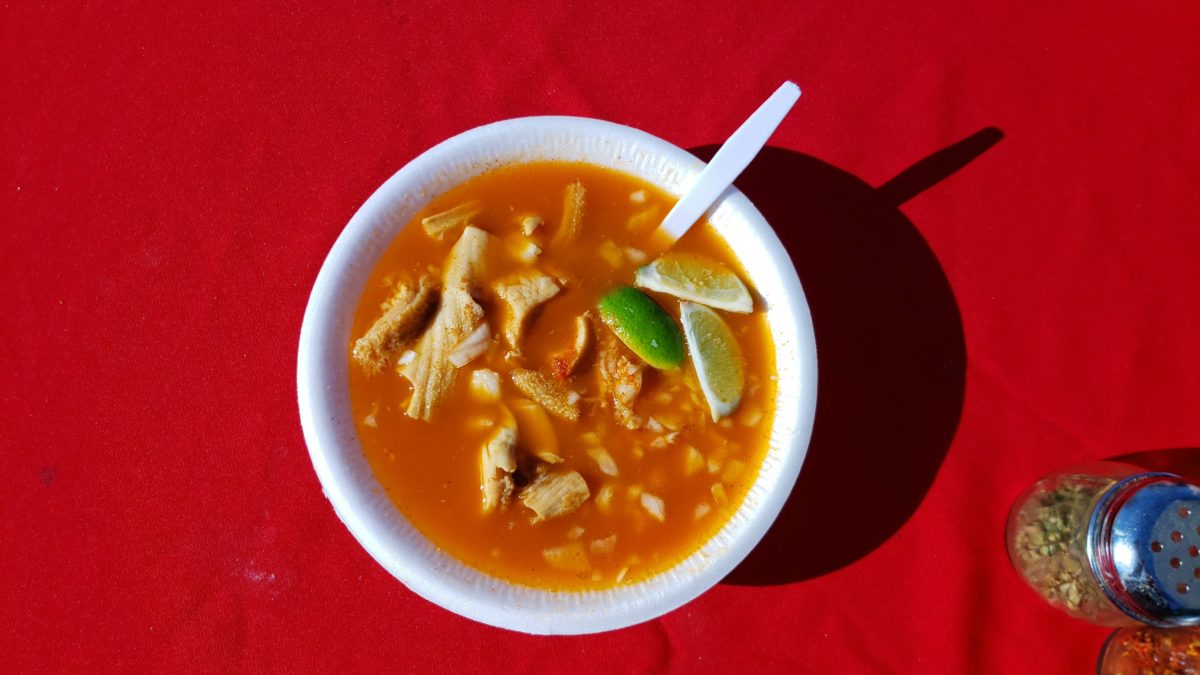
[dropcap size=big]T[/dropcap]here’s usually a brief moment of contemplation involved when eating menudo, Mexico’s world-famous pansa soup. Where you consider a cow tripe's relationship with its digestion process. But it is a mental hurdle well worth getting over to enjoy a bowl of deeply comforting menudo and its highly sought after hangover-annihilating properties.
To some, it conjures up vivid memories associated with the long hours and labor that go into making the dish (the pansa isn't going to get squeaky clean themselves). But to many, it is a symbol of working-class cuisine that transforms a protein that would normally be tossed and turns it into something absolutely delicious. Most importantly, menudo is a communal dish, that’s often shared on weekend mornings among families or those closest to you.
"Menudo is a working-class sopa," Enrique Ochoa, professor of History and Latin American Studies at Cal State LA, tells VICE. Menudo became popular in the US in the 1930s and 40s when migrant workers from Mexico settled in places like East L.A. or San Antonio.
While it’s uncertain what part of Mexico menudo originated from, Spain has a dish that’s called callos a la madrileña that bears a striking resemblance. The major difference? Mexicans added spicy chiles over Spain’s use of sweet chiles. Menudo is known by three names in Mexico: menudo in the north, pancita or mole de pansa in central parts, and mondongo in Yucatan.
In Los Angeles menudo is plentiful, it remains a fixture in the Mexican weekend diet. Often at a spot you’ll see long lines of people with pots they brought from home. Aside from a chance to flex your chafa le creuset cazuela, the BYO-Pot culture that surrounds menudo speaks volumes about coming together. That pot full of menudo is a ritual for many families. Menudo is always there for us when we need it most and it goes a long way in filling up pansas. If you still trip out on making an entire meal out of pansa, just add more limon, chile, and oregano—whatever gets the job done.