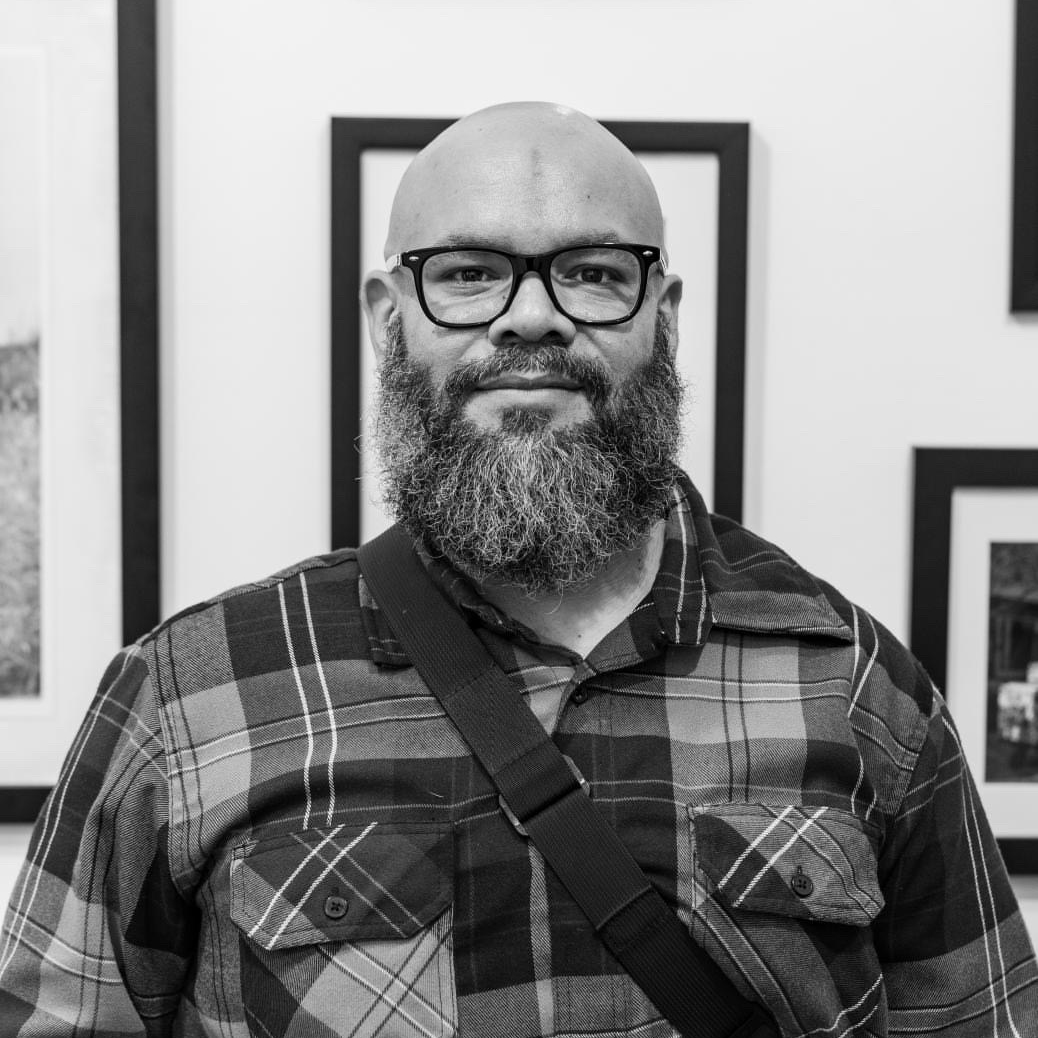
[dropcap size=big]W[/dropcap]hen Roberto Carlos came to Los Angeles as a child, he longed for his home state of Oaxaca, Mexico, where he was born into a family of music lovers. An undocumented migrant unable to visit his home country, he threw himself into bolero music to feel connected to his culture and homeland.
Bolero is a musical style marked by its romantic lyrics and incorporates guitar and the requinto, a smaller version of the Spanish guitar tuned to a higher key. The style originated in Cuba in the 1940s and became widely popularized in Mexico by tríos románticos during the famed Golden Age of Mexican Cinema.
“The first time I heard bolero music was at the age of ten. And I just remember how there was something that resonated to that music towards my story of how I was raised,” explains Carlos. “My dad was a big bohemio and he loved bolero music, especially tríos from Oaxaca.”
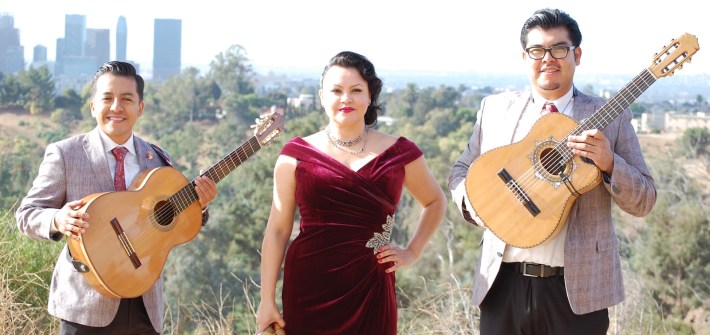
Today, as an artist and musician, Carlos is the mastermind behind Boleros de Noche (BDN), a project dedicated to preserving and celebrating Latin American bolero music history in Los Angeles. Since 2015, he’s been spreading the bolero gospel throughout the city via BDN’s annual concert series and as a member of bolero trío, Tres Souls.
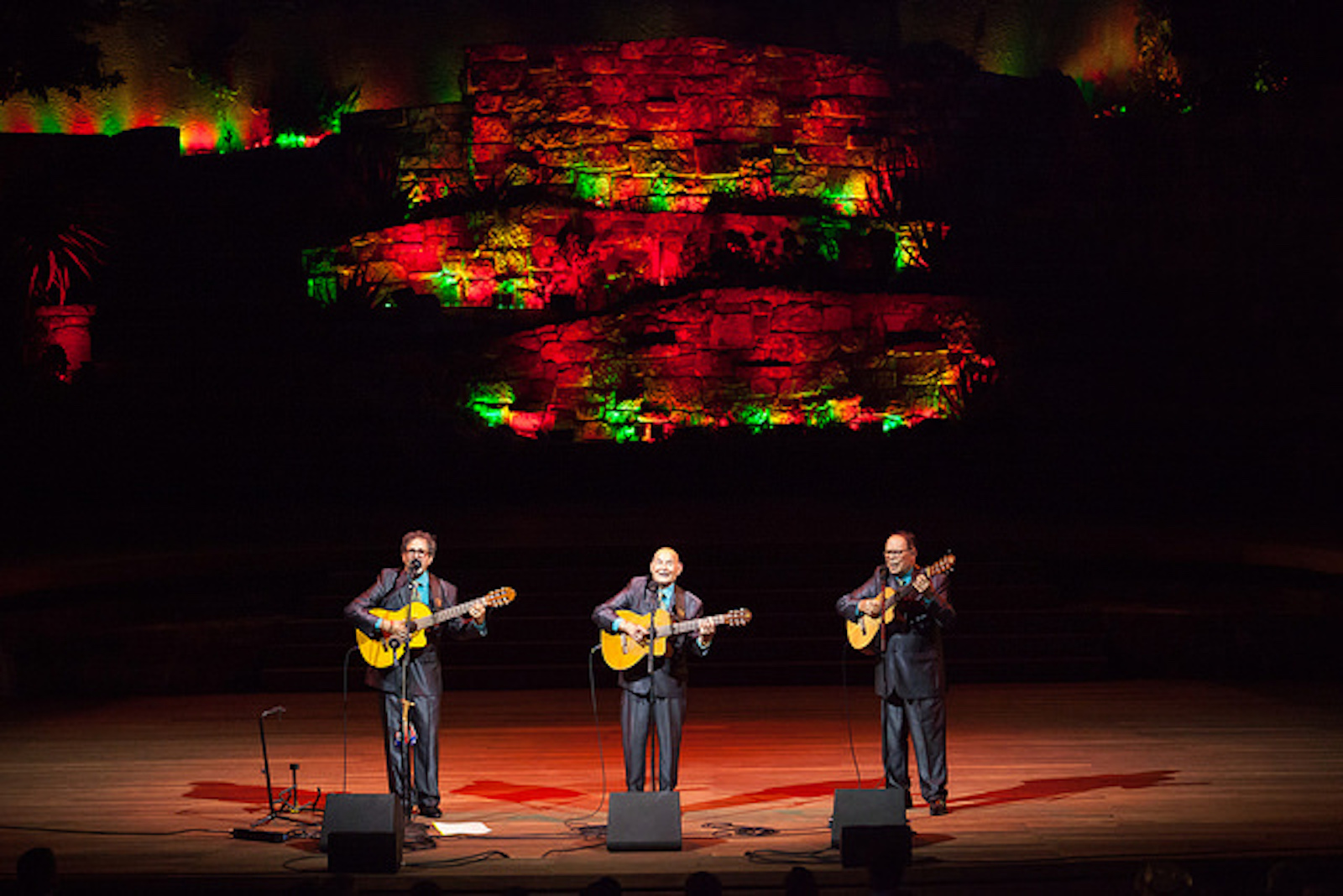
Carlos quickly found a loyal following of bolero-loving Angelenos, who have a long history of embracing the genre ever since it first arrived in Los Angeles. In Barrio Rhythm, Steven Loza recounts when bolero gods Trío Los Panchos first arrived in Los Angeles in 1950, they were warmly received by Angelenos at the Mayan Theatre, where they performed for two weeks straight.
Carlos credits the steadfast popularity of bolero music in Los Angeles to its community of immigrants, who came from different Latin American countries, and brought with them their love of bolero.
Since then, bolero music has clearly left a lasting impact on L.A. musicians. Mexican American and Chicanos have been breathing new life into bolero music with a modern twist that incorporates mainstream American influences, such as rock, R&B, and inglés. According to Loza, El Chicano’s 1971 rendition of Sabor a Mí, soulfully sung by female lead vocalist Ersi Arvizu, became known as “the eastside anthem,” and is considered one of the most important musical legacies of the era. Grammy award winning East LA Chican@ rock group, Quetzal, is known for their take on traditional bolero songs. More recently, La Marisoul, lead singer of La Santa Cecilia, embraced her love for boleros on her 2020 solo album.
Carlos credits the steadfast popularity of bolero music in Los Angeles to its community of immigrants, who came from different Latin American countries and brought with them their love of bolero. “L.A. is a huge part in creating this bolero movement. People come from different cultural backgrounds, but being Latino and loving culture is what L.A. is about,” says Carlos.
To date, BDN has reached over 10,000 people through over 13 concerts at venues such as La Plaza de Artes y Cultura, Levitt Pavilion, and the Ford Theatre. Their next stop? Carlos dreams to one day organize a noche de bolero at the Hollywood Bowl.
While the ongoing pandemic has put a pause on in-person events, this hasn’t stopped the BDN team, who are curating monthly bolero playlists on Spotify and are busy planning their first ever virtual concert on March 5th. The show will feature female artists from Mexico and Los Angeles, Guerrero-based duo, Las Hermanas García, and L.A.’s very own trio, ELLAS. Carlos made sure BDN concerts reflect more traditional bolero sounds, as found with Las Hermanas García, as well as musicians that blend contemporary influences, like ELLAS.
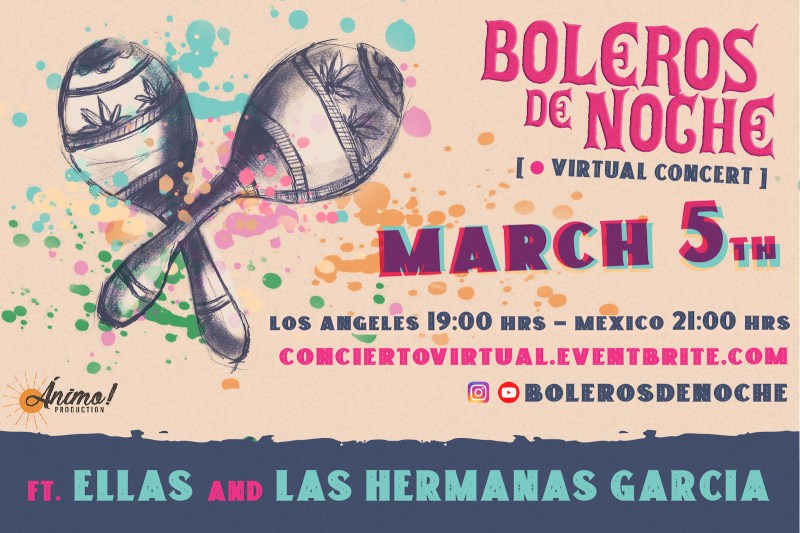 The concert, taking place just days before International Women’s Day (March 8), reminds us that women have always had a huge impact on bolero music. Mexican pianist and songwriter, Consuelo Velázquez, wrote the famous “Bésame Mucho,” and composer María Grever wrote “Cuando Vuelva a Tu Lado,” Carlos shares. “These women wrote like over 800 boleros in their time. So the power of women has always been there. To work alongside ELLAS and Las Hermanas García is just a testament to the talent of women in bolero musicianship.”
The success of Boleros de Noche demonstrates that Los Angeles is very much a Latin American city and our long relationship with bolero music is here to stay. “Bolero, like once my dad said, ‘el bolero nunca va pasar de moda,’” says Carlos. “It will never fade out [of style]. It will surpass different musical generations.”
To purchase tickets to Boleros de Noche’s March 5 concert, visit conciertovirtual.eventbrite.com
With the purchase of a ticket, attendees will receive a discount code to choose a pre-fix dinner from three restaurants: Madre Restaurant, Chichen Itza, and Holbox.