Is it quesillo or queso Oaxaca?
You’ve probably briefly asked yourself this mid-cheese pull as you devoured a tlayuda or stuffed your face with a stacked cemita.
The thought struck me after seeing a viral TikTok video. The brief comedy skit continued, setting up a typical situation for any Mexican American child who grew up going to Mexico’s grocery stores with their parents. In the skit, TikTok user Daniel Lechuga recounts his experience arguing with the cheesemonger and going back and forth with the lady at the counter. He is positive it is Oaxaca, and she swears it is called “quesillo.”
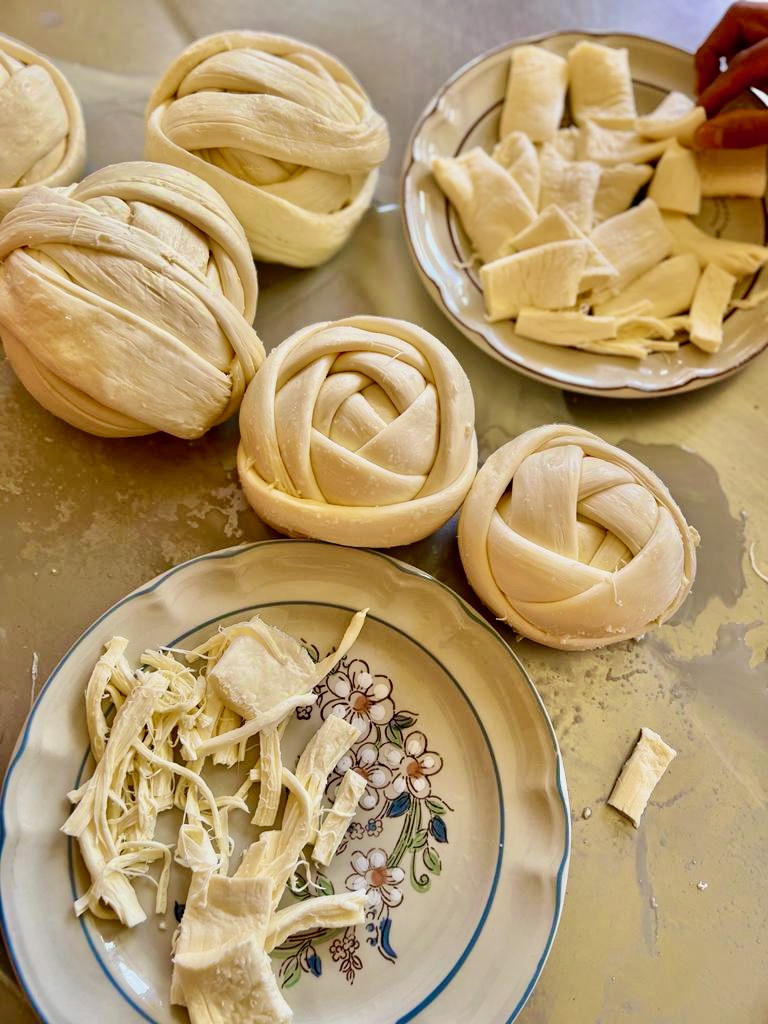
Unless you are Oaxaqueño or from Puebla, or you have an underground cheese plug, the cheese you are enjoying Stateside is queso Oaxaca. The main difference is that queso Oaxaca is made from pasteurized milk, and quesillo is made from unpasteurized milk. The unpasteurized milk provides a grassy, briny, and sometimes barnyard-like funk revered in the Mexican cheese world. Queso Oaxaca is more like American string cheese and has a flavor similar to an American-style mozzarella or Monterey Jack.
Cheese that can be finely shredded and is perfect for melting is known by several names in Mexico, including quesillo, queso para desebrar, queso de adobera, queso Chihuahua, and asadero. Quesillo is famous for its string cheese-like texture achieved by the hand motion of pulling the cheese apart. Aside from the fact that quesillo is made from raw milk vs. and queso Oaxaca is pasteurized, the foundation is the same.
But why is it such a controversial issue in the realm of regional Mexican cuisine?
It is prohibited to sell unpasteurized cheese, and the rule in the United States is that you can import cheeses that have matured for more than 60 days.
Although Oaxacan cheese is a DIY import crucial to Mexican staples like tlayudas and cemitas, cheese culture in Mexico goes beyond quesillo. In the Southern region of Mexico in Yucatán, they import Edam cheese, also known as "queso de bola" in Mérida, from Holland. In states like Zacatecas, extra pungent “queso de pata” is prized for its robust flavor that comes from aging.
On a quick quest to crack the raw cheese controversy, I headed to Cemitas La China Poblana to find some answers. They consider themselves in “the Heart of Boyle Heights” and are considered one of the first cemita poblana that started selling in the 90s. They became popular in their food truck days when they parked next to Salazar Park in 1991. They relocated into a restaurant in 2005, where they still reside to this day, and expanded their menu to include tacos árabes and tostadas.
La China Poblana serves queso Oaxaca, the pasteurized version of quesillo, which is also more economically friendly.
People will only see this from the “consumer stance, not from the kitchen’s point of view,” owner Abraham Quitl, originally from Puebla, says. He says quesillo is a serious liability because you are using unpasteurized cheese.
When asked what he calls this specific cheese, he quickly responds with a smirk, “I call it queso Oaxaca because that's where this cheese originally came from, but ask anyone else, and they will give you another answer.”
He was correct.
Somehow moments after I interviewed him, a young woman approached the window to buy a cemita with queso fresco, which I afterward understood she intended for queso Oaxaca. From this real-time example, the simplicity of the terms makes a significant effect since, to many of us, queso fresco represents a completely different cheese that is nowhere near queso Oaxaca or quesillo.
As I rummaged through my head for additional questions, my mind became more knotted than the cheese on the cemita.
As I rummaged through my head for additional questions, my mind became more knotted than the cheese on the cemita. I did some more digging into Oaxacan history, and this cheese, like every other, has a past.
According to dairy legend Leobarda Castellanos Garcia of Reyes Etla, Oaxaca, accidentally invented Quesillo in 1885 when she accidentally let the coagulated milk exceed the point for producing cheese. Leobarda knew that her negligence would lead to spoiled cheese and a strong scolding from her parents.
Fortunately, the cheese universe had her back. Leobarda decided to improvise and correct her error by adding hot water to the mixture. The outcome was a thick paste that was sticky, produced long threads, and had an unexpectedly tasty flavor. Making the most of the mistake, her family decided to begin developing a new recipe. They chose to call it quesillo since, despite its appearance, it was just not the cheese they regularly make. As the cheese made its way out of its small town, it slowly made it to other states and, indeed, out of the country. To this day, Reyes Etla is still known for quesillo, where they even host an annual quesillo festival to celebrate their prized cheese.
Studying the cultural context is necessary for anything outside your field of knowledge. So, if you ever find yourself in Mexico's beautiful state of Oaxaca, remember to order your tlayudas with extra quesillo rather than queso Oaxaca unless you want to be uncomfortably corrected.
Or don't if you are lactose intolerant like me, and simply watch others enjoy the mouthwatering cheese-topped dish.