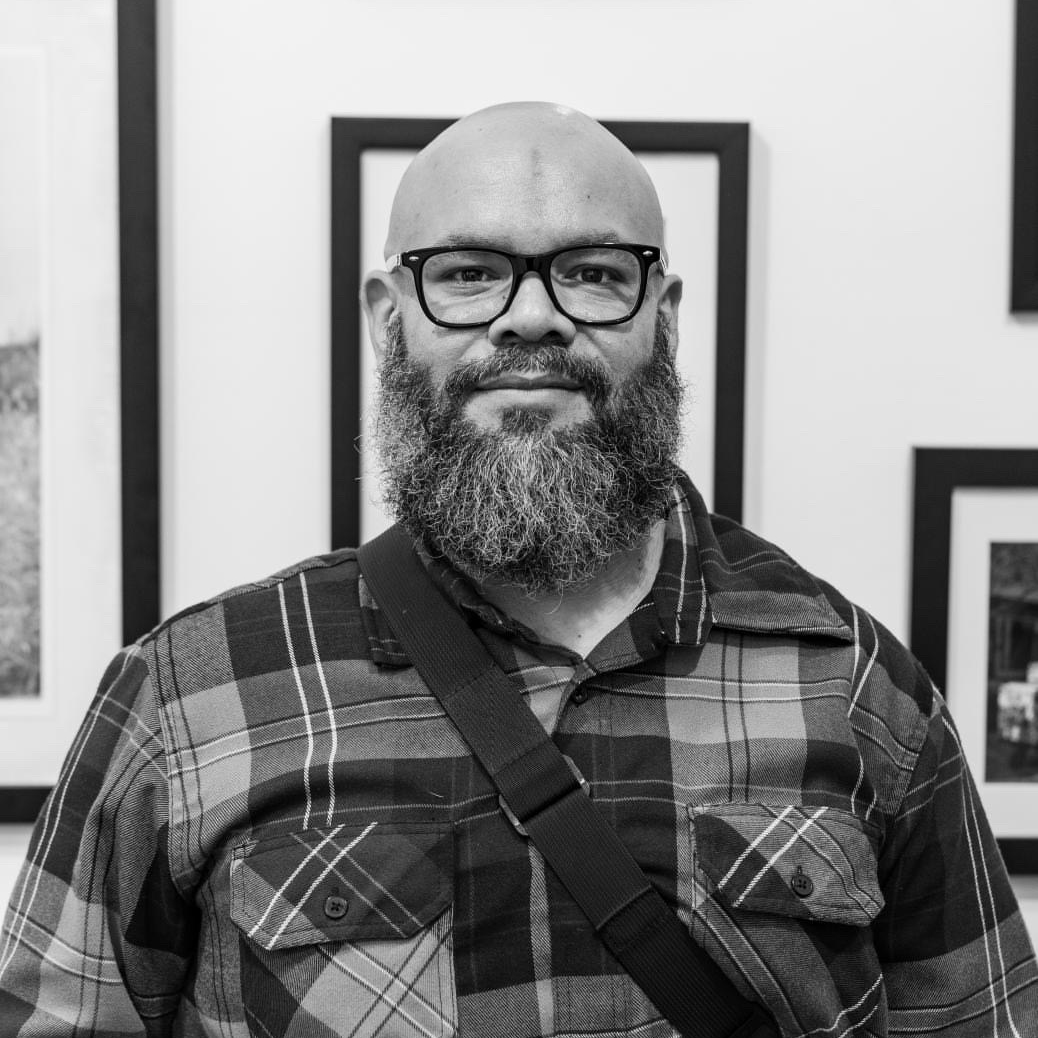
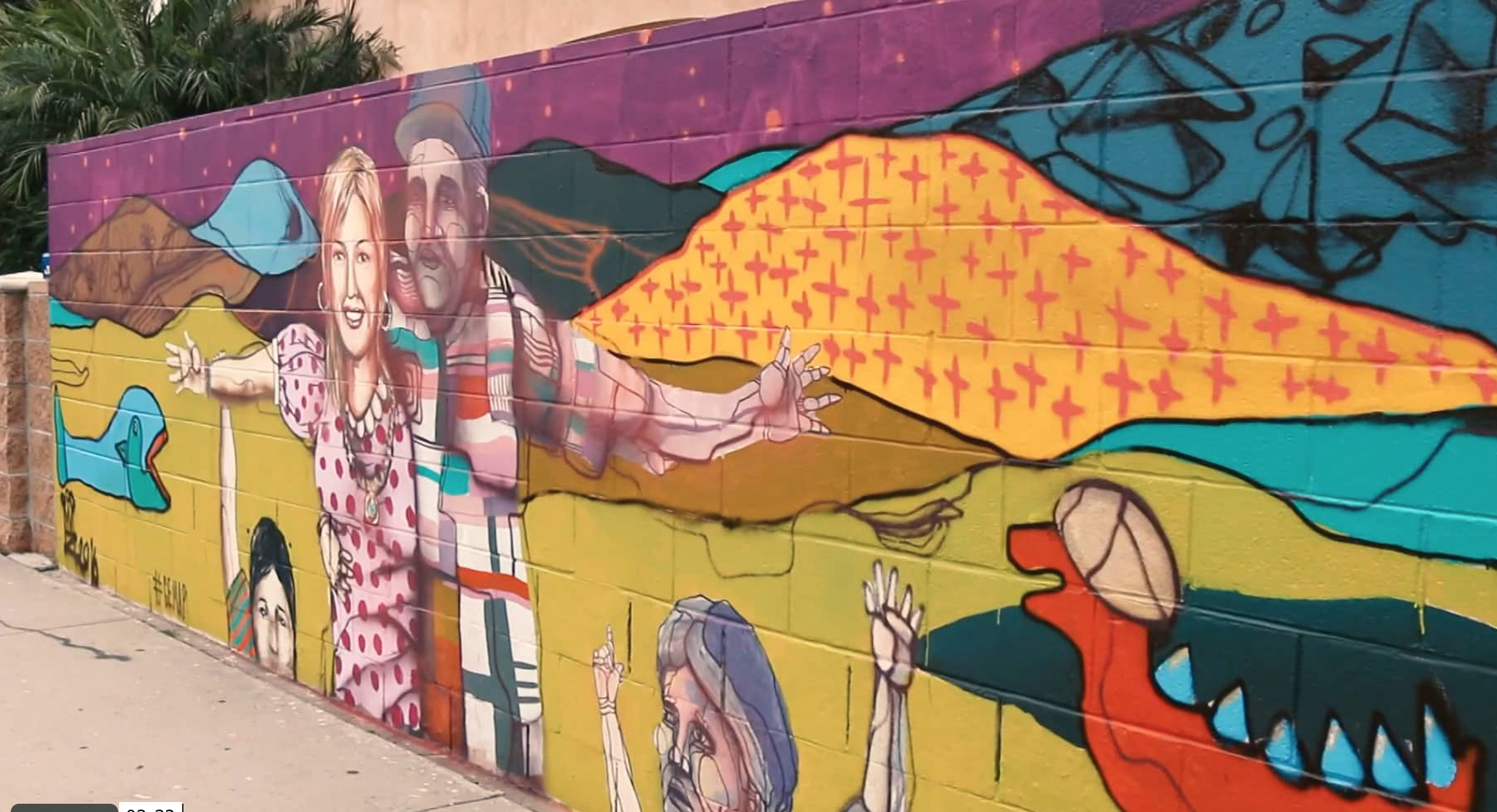
Romeo Guzman is a member of the South El Monte Arts Posse, an arts collective based in South El Monte and EL Monte. They recently created a mural in collaboration with muralists from Mexico in an effort to recover and revive our lost murals from the 1960s and 1970s. Through their archival project we discovered the history of muralism in the community. They have since created a digital archive, that hosts, among other things, an audio interview with the director of the 1960s project.
Our pioneers, the Mexican migrant families who made South El Monte and El Monte home, did not write memories, and until very recently did not hold political office. Yet, like today's migrants they constructed the cities' buildings, picked the vegetables and fruits for its residents, and contributed to vibrant youth cultures of the era. Armed with a desire to insert migrant and working class voices into the official narrative, we (the South El Monte Arts Posse) set out to construct an archive for and with these two communities. In January and February of 2014, we invited La Casa de El Hijo del Ahuizote (the Magón archive in Mexico City) to help us work with community members to construct a new and alternative archive. In addition to collecting stories with residents, hosting talks at South El Monte high school, and conducting creative writing workshops with Zumba participants, we digitized hundreds of documents. In South El Monte City Hall's basement, we quietly and gently opened boxes, emptied folders, and looked through thousands of photographs. We found black and white photos depicting ordinary but lovely scenes of life around the city -- the dirt stretch Rush Street in the 1960s, boxing matches and summer days at the swimming pools frozen in action, a beauty contest held at Golfland, young boys playing baseball and football, and to our surprise photographs of murals from an unknown area.
These photographs are the origins of a search of the history of South El Monte and El Monte’s lost murals of the 1960s and 70s. We searched through newspapers, digitalized a 16mm film, and spoke with artist and professor Ron Reeder, who was heavily involved in the project. Funded through Comprehensive Employment and Training Act (CETA), artists such as Gronk created murals in El Monte, which quickly drew the ire of El Monte City officials and led to a moratorium on murals. In South El Monte, Ron Reeder worked with local youth to make new murals in school buildings, but also on the cinder block walls of SEM neighborhoods. These murals, we learned, connected our small and humble city to the long history of muralism in Los Angeles and Mexico. Reeder and local youth painted a replica of David Alfaro Siqueros’1932 mural “America Tropical.” Siqueros’ mural at Placita Olvera was whitewashed and lay hidden for decades. South El Monte’s humble replica, we like to think, was holding it down for Siqueros, Mexican muralism, and Los Angeles.
Since discovering this history we have hosted a screening of a 16mm from the 1970s, a conversation with artists Ron Reeder, and presented at many of South El Monte and El Monte’s schools. In addition, we have honored this history by creating a new mural. Our new mural, painted by Mexican artists Alonso Delgadillo and Fernando Corona, connects us to SEM and El Monte’s lost murals, to the history of Mexican muralism in Los Angeles, and to Mexico.
**To learn more about this history visit SEMAP’s digital archive at semapeastofeast.com