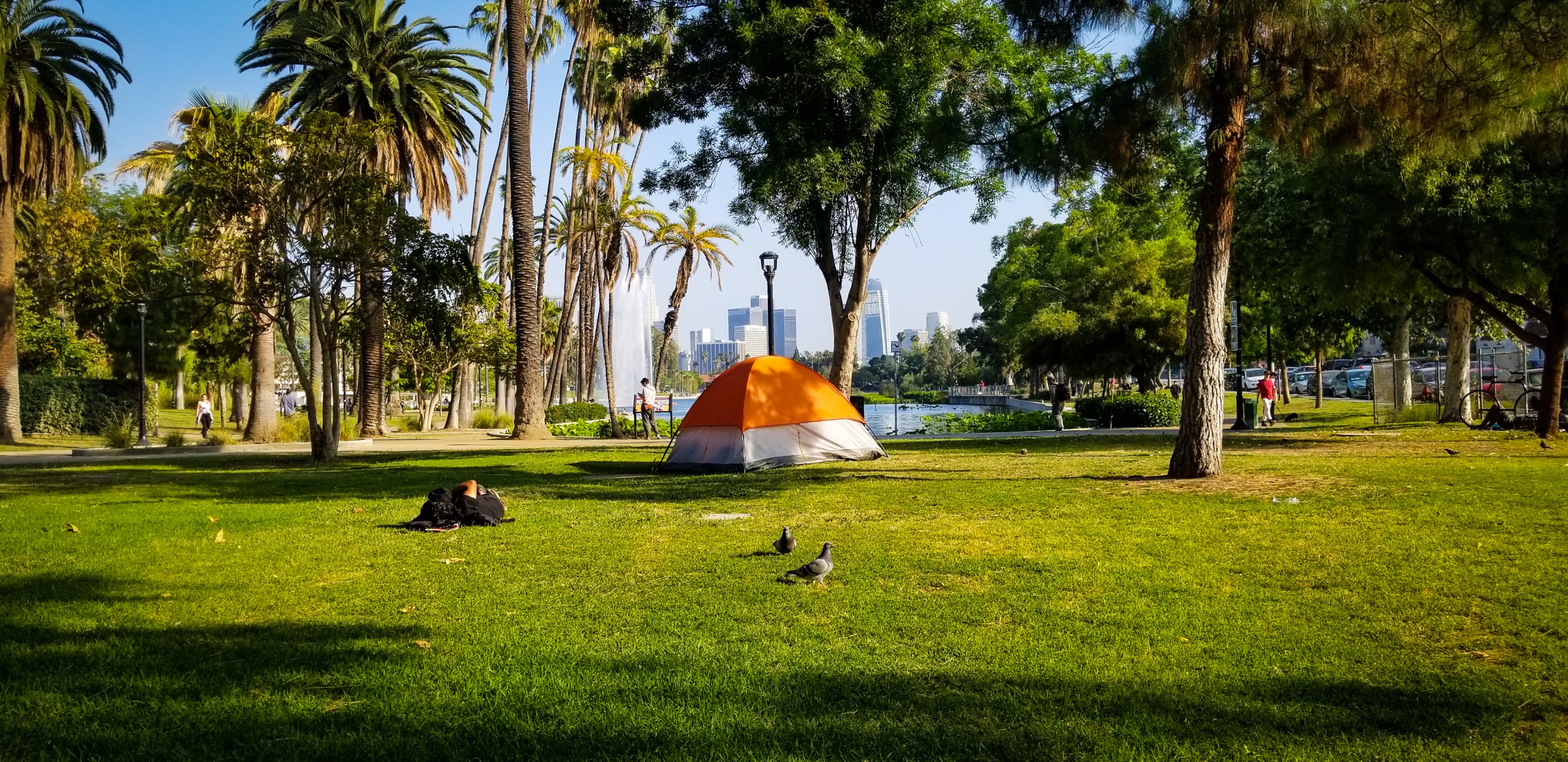
[dropcap size=big]A[/dropcap]rthur Davis spends his days and nights in a camper van he’s converted into a tiny home, with a bed, a make-shift counter and a butane burner to cook. He lives across from the pupusa and elote vendors near Echo Park Lake, comfortable — relatively speaking — but technically unhoused.
“I was born in the 40s, so I’ve seen a lot of changes. When I was growing up there were no telephones. The first house I bought cost me 14,000,” Davis explained on a bright afternoon. “Back then one man could work for a year to provide for his family and buy a house.”
From the outside, the van looks like the camper that anybody who loves the road might dream of owning. At one point during our interview, two young women walked past Arthur’s Chevy on their way to lay out in Echo Park. I heard one say quietly to the other, “That van is sick!”
But inside, the couple of windows that Arthur had were blocked, heightening the stuffiness of the van’s interior. The sky hung with June Gloom, but I imagined that at the height of the summer the van gets to be hot and isolating.
Davis declined to have his photograph taken, and said he distrusted cell phones. His kids tried to get him to use a Galaxy 8 when it first came out but Arthur wasn’t having it, so now he carries a free phone designed for “old people.” Arthur sees the humor in carrying around a phone with large buttons on it, and embraces it. “I don’t even have to worry about someone stealing it because nobody wants it!”
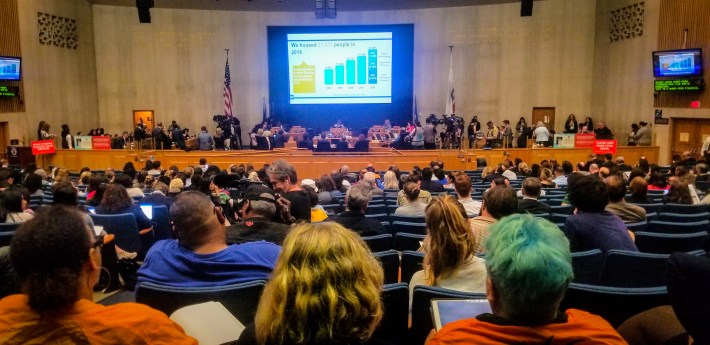
It was a Tuesday, and only a few hours earlier, the county Board of Supervisors released the 2019 Greater Los Angeles Homeless Count, which showed double-digit increases in unhoused people in the county and city limits. Nearly 60,000 people live on the streets in L.A. County, with most of that in L.A. proper.
The homelessness count showed that efforts to mitigate the crisis are not working despite hundreds of millions of dollars in voter-approved money that has been thrown at the problem. Homelessness grew by nearly half since Mayor Eric Garcetti took office in 2013.
RELATED: A Stand-off in Defense of One Wheelchair Accessible Bathroom in Echo Park
As Davis’s saga demonstrates, officials up and down the accountability ladder have a housing crisis on their hands and it is getting worse. Like Arthur, 68 percent of the homeless have lived in L.A. County for at least 10 years.
He is also among an estimated 16,000 people who live in vehicles, the homeless count found. They park anywhere that street ordinances allow, and this list is constantly shrinking. Davis has been living on wheels on the street since 2015, the year he simply bottomed out of the rental market.
“I worked in the electronics field all my life. I had good jobs, good pay, everything,” Davis told L.A. Taco. “I had a job in medical systems where I prepared equipment in hospitals. I had an expense account, new car every year. When I got tired of the stress, I quit and found another job.”
Arthur was at the height of his career, at a time engineers like him were in demand. But he moved onto the beer industry. “I worked for Miller for ten years as an engineer,” he said. Arthur broke into laughter again as he tells me about one of the best perks of working for one of the largest beer companies in the world – free beer!
'I have freedom but I don’t have ultimate comfort.'
Until it all fell apart. It took awhile for the ink to dry, but eventually Davis and his wife got a divorce. After separating, Arthur quit his job and hit the road. He eventually landed in L.A., where his kids joined him. He decided to settle down in Echo Park and raise the children there.
But then things started changing. Rent increases in Echo Park were too steep to keep up with, so Davis began downsizing his life. With two children enrolled in Echo Park schools, he sought to do everything possible to remain in the neighborhood — now of L.A.’s most gentrified.
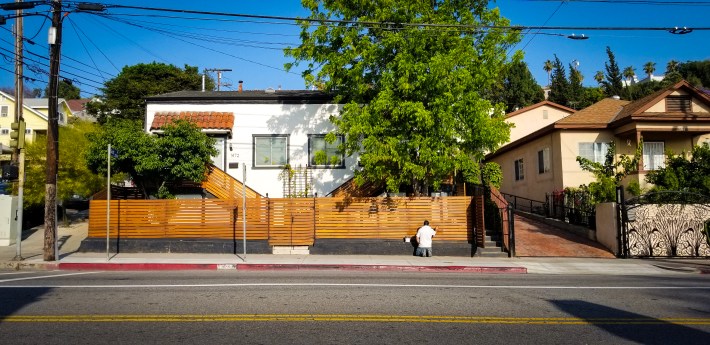
Arthur eventually abandoned his house for a smaller apartment in the neighborhood, just so his kids could graduate in Echo Park and be close to their friends. He exhausted most of his savings to make up the difference between what he was used to paying and what he was paying at the time.
“They increased my rent 700, 800 dollars each month, and the last few years it really started to accelerate,” he tells me.
Once his kids reached adulthood, though, Arthur helped them get settled into their own apartments, before he traded his for a live-in vehicle. First it was a motorhome, but today he lives in a 1970s Chevrolet G20 van. He has downsized his life to the contents of what the van can carry, far from the three-bedroom homes that he used to rent for less than what a one-bedroom costs today.
Davis says he chooses to remain in L.A. now to stay close to his kids. “Sometimes I go to visit them, sometimes they come visit me,” he said. He survives off of his Social Security. “They think I’m crazy,” he laughed.
RELATED: How RV Dwellers in the Valley Face the Squeeze of Expanding Parking Restrictions
[dropcap size=small]A[/dropcap]rthur doesn’t look like an old man. He hardly has a wrinkle on his face and he moves well. He still rides motorcycles. He seems like a young adventurous soul trapped in 75-year-old’s body; I spot a tattooed cross on his forearm and an unopened can of beer on his counter.
I got the sense Arthur has had a full life. Surviving Vietnam, working his way up through a corporate system as a black man, starting a family. But he’s obviously also had hardships.
The Chevy van, in the meantime, is easier to park than a big RV and its age means it doesn’t have to pass a smog test, which can add hundreds of extra dollars in annual vehicle expenses. All over L.A., living in a vehicle — rather than on the streets — offers people like Arthur a sense of shelter and freedom as well as safety from the elements, criminalization, and violence.
But it isn’t housing.
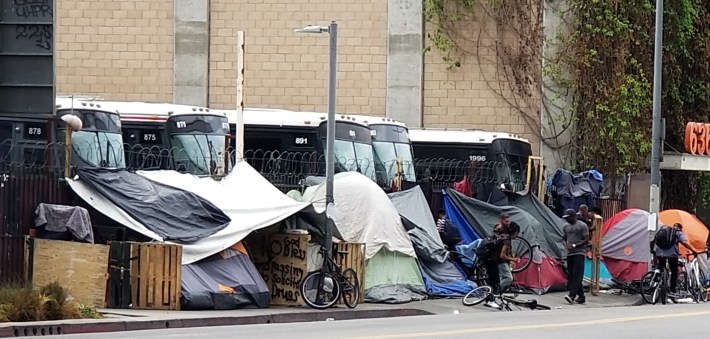
Arthur is just one tragedy away from being on the bare streets or worse. He might be fortunate enough to have health now, but I wondered what would happen if he got sick, or something happened to his van. “The van for me was somewhere in the middle,” Davis said. “I have freedom but I don’t have ultimate comfort.”
African Americans made up nine percent of the county population but about 40 percent of its homeless population, according to a LAHSA report on black homelessness in L.A., based on 2017 figures. “A theme that cut across the committee's work was that racism, discrimination, and unconscious bias in our public systems and institutions has contributed to, and remains intertwined with, homelessness,” the agency said.
In its report, LAHSA recommended officials address in the inflow of homeless by increasing affordable housing, limiting rent increases, and preventing unjust evictions. For Arthur to survive a war and become successful at a time when black folks struggled to find equality in the workforce, just to end up on the streets, is sadly a common story.
Davis has a happy chuckle and a habit of laughing out loud, particularly when describing serious moments in his life or contemplating his future. “The average lifespan is like 78. So that means I got like three or four more years. I don't see myself in someone else's care ... like some mean nurse, forcing me to eat or go to bed at 9 o’clock,” Arthur said, laughing.
RELATED: Casa de Clarke: A Model For Unsupervised Homeless Housing Opens in Highland Park