
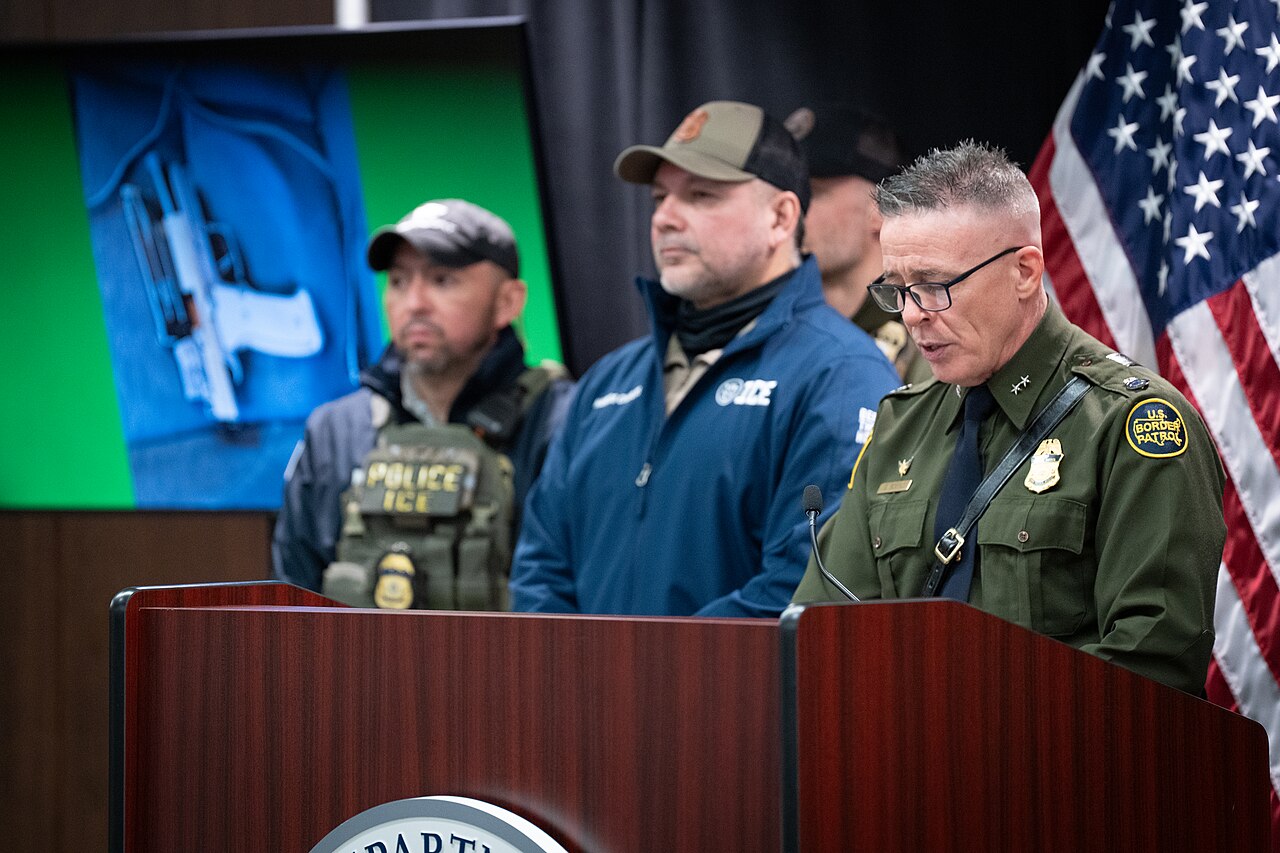
Border Patrol official Gregory Bovino announced he will retire at the end of the March, in an interview with right-wing media outlet Breitbart. Bovino was demoted from his previous position of Commander in Chief at Large of U.S. Border Patrol following the killing of two U.S. citizens, Alex Pretti and Renee Good. According to the BBC, he has not yet submitted the proper paperwork for his retirement.
Bovino, 57, is one year away from the mandatory age of retirement in the U.S. Customs and Border Protection. He has been a part of the agency for 30 years, according to Breitbart. Bovino joined Border Patrol in 1996 in El Centro, working in multiple border sectors and various assignments under the Border Patrol Tactical Unit (BORTAC). Bovino is notorious for leading U.S. Customs and Border Protection in what DHS boasts as the most sweeping mass-immigration enforcement operations in the agency’s history.
Bovino started his notorious rapsheet under Trump here in Los Angeles. He oversaw “Operation Trojan Horse” last summer, when Border Patrol agents burst out of a Penske truck at the Westlake Home Depot where they kidnapped at least 16 people.
He led targeted operations afterwards in democratic-led cities such as Operation Midway Blitz in Chicago, Operation Charlotte’s Web in Charlotte, and Operation Metro Surge in Minneapolis.
Bovino spoke with Breitbart on Sunday saying, “The greatest honor of my entire life was to work alongside Border Patrol agents on the border and in the interior of the United States in some of the most challenging conditions the agency has ever faced.”
Bovino was one of the several DHS shake-ups in recent months. Kristi Noem, U.S. Secretary of Homeland Security, is being replaced by Markwayne Mullin after being reassigned to Special Envoy to the Shield of the Americas, and Trisha McLaughlin, who’s being replaced with Lauren Bis, after stepping down as DHS’s Assistant Secretary for Public Affairs.
DHS has stated they arrested 5,000 people during the raids in Los Angeles last summer. According to TRAC, as of February 7, 2026, 73.6% of people in ICE detention have no criminal convictions, and many that do have convictions have minor offenses, including traffic violations.