New Los Angeles City Councilmember Hugo Soto-Martinez wants to dismantle a controversial “no-vending zone” on the Hollywood Walk of Fame.
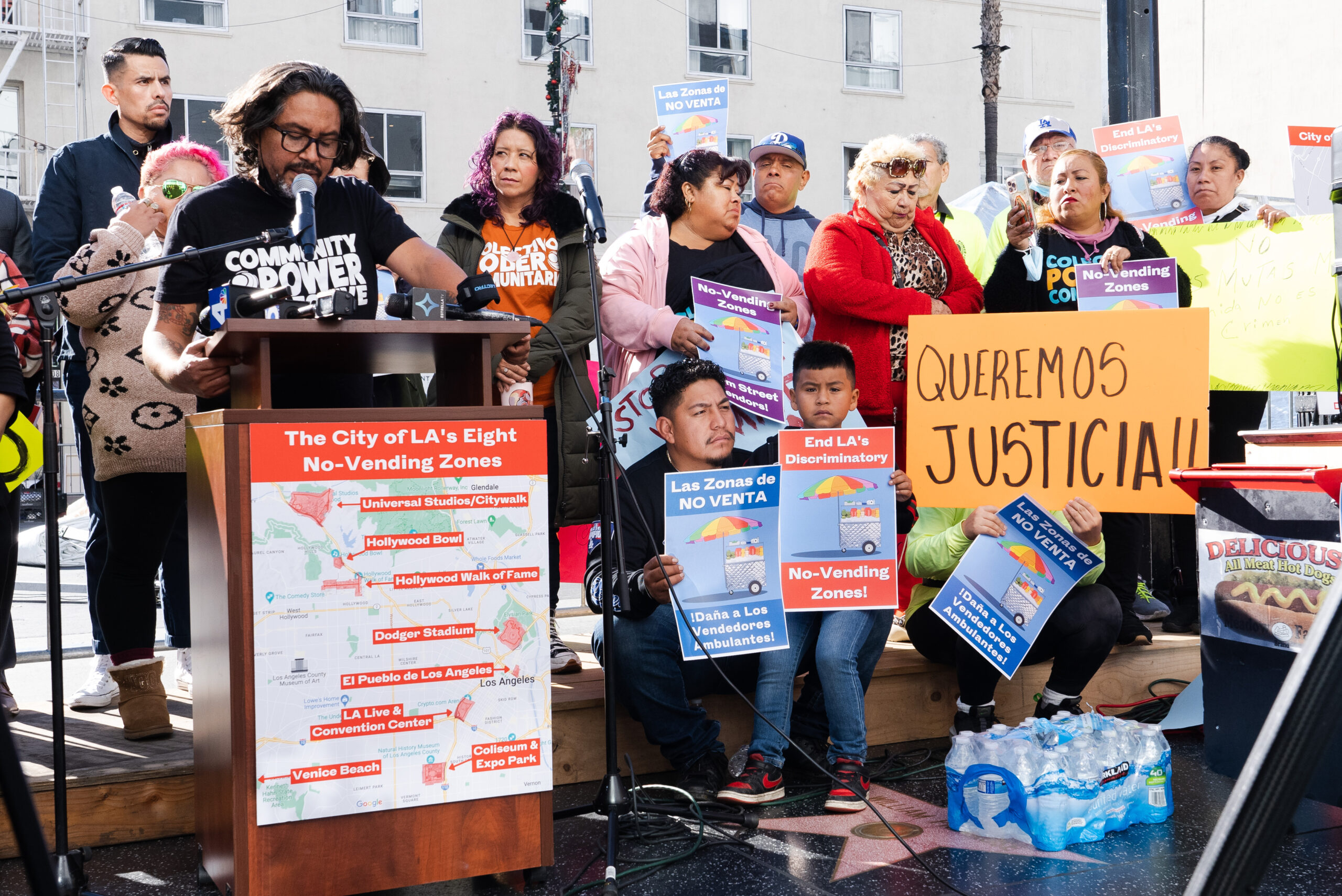
When Los Angeles legalized street vending in 2018, the City Council established eight no-vending zones at tourist destinations like the Walk of Fame, Crypto.com Arena and Dodger Stadium, arguing vendors obstruct sidewalks and force pedestrians into traffic. In a lawsuit against the city filed on Dec. 7, the street vendors argue that the zones violate state law and were likely established to protect business interests from competition.
“My parents were street vendors growing up,” said Soto-Martinez, who took office on Dec. 12 and represents the area. “I don’t believe there should be no-vending zones, including in the Walk of Fame.”
The councilmember said his office is looking into “what apparatus is needed” to dismantle the zone, which runs 1.3 miles along Hollywood Boulevard and is the workplace of around 50 vendors each weekend. “Those decisions will be made with stakeholders, especially the street vendors,” he said.
In the rest of Los Angeles, street vending is legal for those with permits, and enforcement is typically complaint based, says Katie McKeon, one of the lawyers with Public Counsel who filed the lawsuit. Inside the no-vending zones, enforcement is proactive. According to spokesperson Paul Gomez, the city’s Bureau of Street Services (BSS) also deploys officers on the Walk of Fame to ticket vendors.
Hot dog vendor Merlin Alvarado has worked Hollywood Boulevard for eight years and is fined “two or three times a month,” she says in Spanish through a translator. Tickets are between $100 and $200, and she’s received more than 30.
“I can’t pay them,” she says. “It impacts my credit. My debt is rising. It’s a cycle I may not be able to get out of.”
SB 946, the state law decriminalizing street vending, allows cities to establish no-vending zones for “health, safety or welfare concerns” but prohibits establishing zones because of “perceived community animus or economic competition.”
The lawsuit argues L.A. never met these standards when it established the zones, and then undermined any congestion argument with its ongoing “al fresco” dining program, in which restaurants set up tables on the sidewalk or the street.
“We’ve seen with restaurants that they can take out tables for fine dining,” says Alvarado. “I take up less space with my two-by-three setup.”
The lawsuit charges that in creating the no-vending zones, the City Council bowed to pressure from business interests, including the powerful Business Improvement Districts (BIDs). As the council debated vending legalization between 2013 and 2018, BIDs and affiliated organizations lobbied officials to let them opt out of the program. BIDs’ private security officers had arrested Walk of Fame vendors in the past, reporter Adrian Riskin (who uses the pseudonym Michael Kohlhaas) reported.
Arresting vendors is not current policy, according to Hollywood Partnership BID spokesperson Mackenzie Carter. “We believe street vending laws and enforcement are under the purview of the City of Los Angeles,” she wrote in an email.
On Dec. 8, vendors marched down the Walk of Fame, protesting the no-vending zone as Spider-Man impersonators leapt out of the way. “We also contribute to the economy,” the vendors’ banner declared in Spanish.
After the march, vendor Sylvia Chavez explained that she is more than $3,000 in debt from tickets. Vendors said they are regularly chased from the Walk of Fame by BSS officers. Some say BSS officers ticket them when they aren’t working. (BSS spokesperson Paul Gomez declined to respond to the allegations because the agency “can’t comment on pending litigation.”)
Many Walk of Fame vendors are women supporting their families. Merlin Alvarado, one of the plaintiffs in the lawsuit, says her sales support a family of six in Los Angeles and four more in Honduras.
Plaintiff Ruth Monroy also chose Hollywood Boulevard to support her daughter, “who has special needs and requires a lot of caretaking,” she says in Spanish through a translator. “There’s a lot of doctor’s appointments. I realized I wouldn’t be able to work at a regular place where I would need to ask permission to leave.”
Councilmember Soto-Martinez cannot technically direct the BSS to halt its enforcement without a council motion, according to Katie McKeon, but “they may extend him professional courtesy and lighten up the ordinance if they choose,” she said.
As the child of street vendors, Soto-Martinez says he feels “emotionally connected” to the issue.
“I understand what vendors have to deal with,” he said.
Copyright Capital & Main 2023
This article was produced by Capital & Main, which is an award-winning publication that reports from California on economic, political, and social issues. L.A. Taco is co-publishing this article.