[dropcap size=big]I[/dropcap]n L.A.'s Little Bangladesh, as you pass Western and head east on 3rd Street, you are greeted by newly painted murals organized by The Little Bangladesh Press club. The organizer, Qazi Huda has facilitated a vision of the history, culture, and people of Bangladesh. Mr. Huda is inspired to bring awareness, not only to the Bangladeshi people living in the neighborhood but the entire city. The message is that you are now entering the distinct neighborhood and community of Little Bangladesh in Los Angeles.
Little Bangladesh was first established in 2010 during the mayoral period of Antonio Villaraigosa. The history of Bangladeshi people coming to L.A. starts in the 70s, but it’s important not to stop there when it comes to the story of Bangladesh and its history. The murals on 3rd Street can teach and point you in the correct direction.
Murals in Los Angeles have had a long, rich history that originated with Mexican and Chicano artists. Over time, a diverse group of muralists has produced murals that depict their cultures, communities, and peoples; from San Pedro to North Hollywood.
Murals give power to the people to accurately represent themselves in their neighborhood. According to legendary L.A. muralist Judith Baca, “murals represent and reclaim not only physical space, but spiritual, cultural, and historical space of the peoples of the neighborhood.”
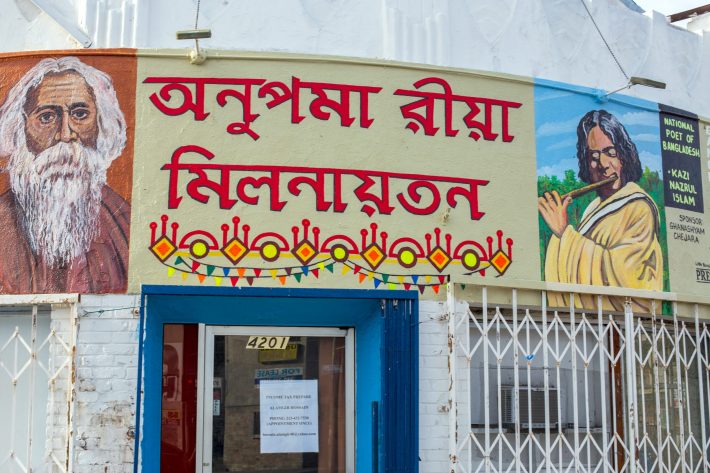
Every mural depicts a different story and message. On Jefferson and 11th Street, in South L.A., “To Protect and to Serve” by Noni Olabasi showcases the history of The Black Panther Party. In Boyle Heights, The Estrada Courts murals are a history lesson of Chicano life and history in Los Angeles.
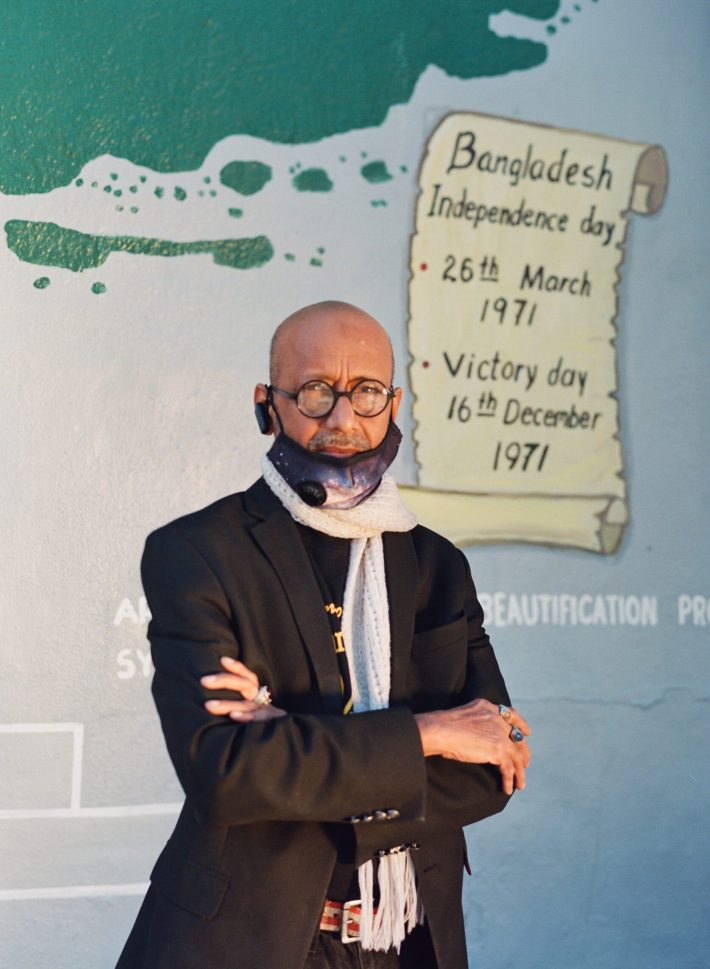
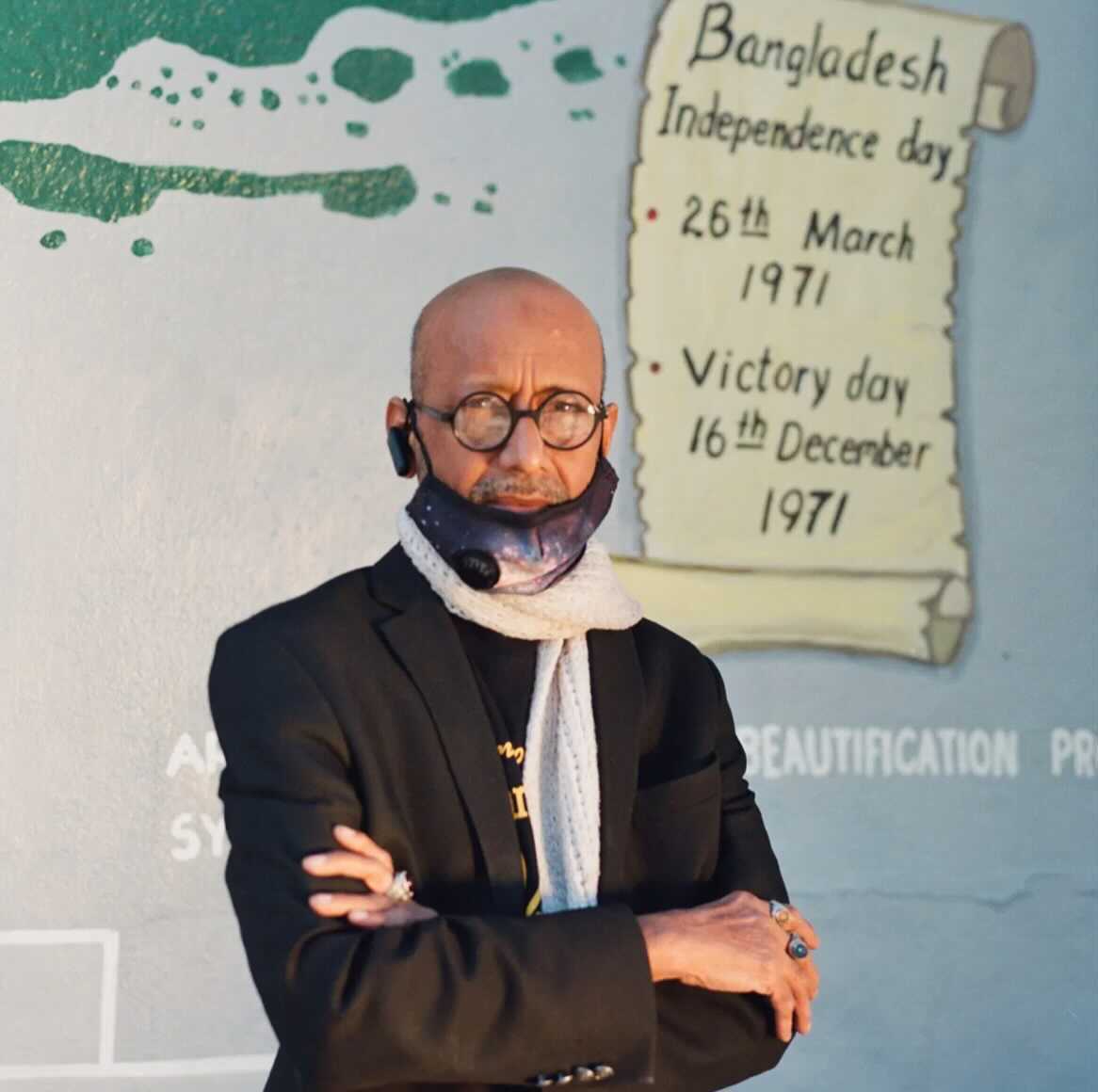
Quazi Huda standing in front of the mural depicting Bangladesh’s independence from East Pakistan
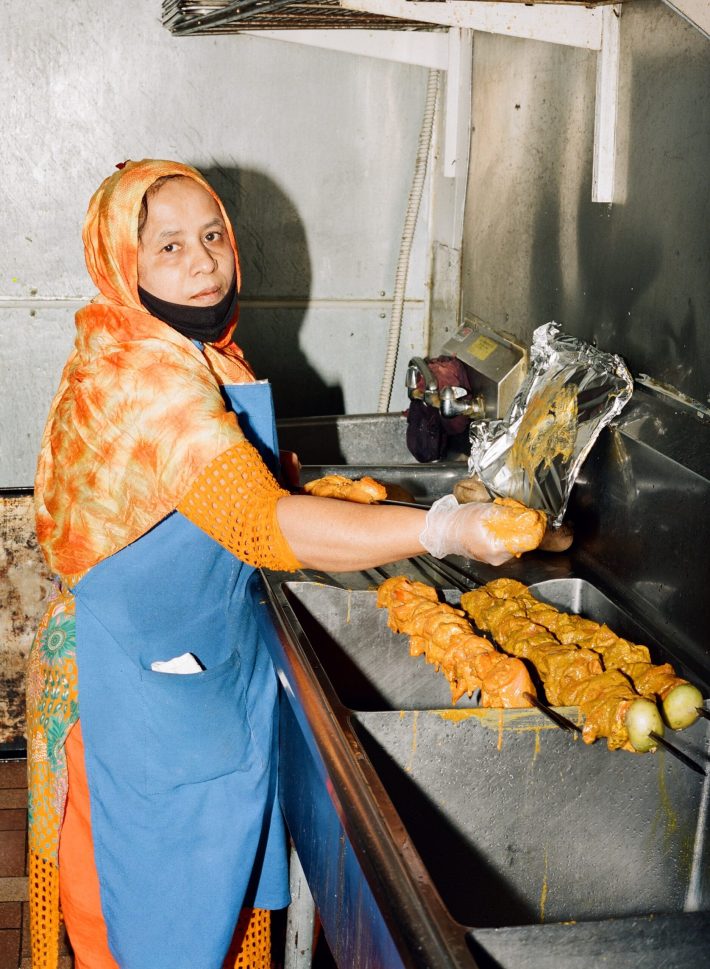
Kabobs being prepared at The Deshi Market.
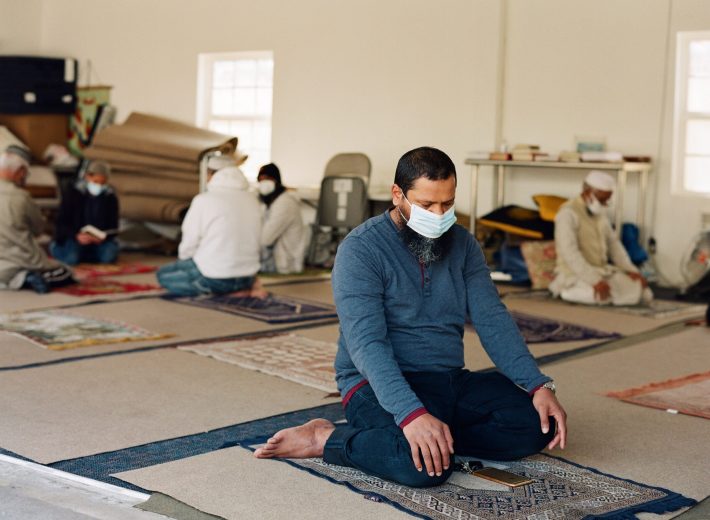
A man praying at The Los Angeles Islamic Center
On 3rd Street and Serrano Avenue stands a mural representing the liberation of Bangladesh from East Pakistan in 1971. Next to the mural is The Los Angeles Islamic Center. Mr.Huda explains, “The L.A. Islamic Center is the heart of Little Bangladesh.” The center is where people connect and build community, from their first steps emigrating to the city to generations moving forward into their future as Los Angeles residents.
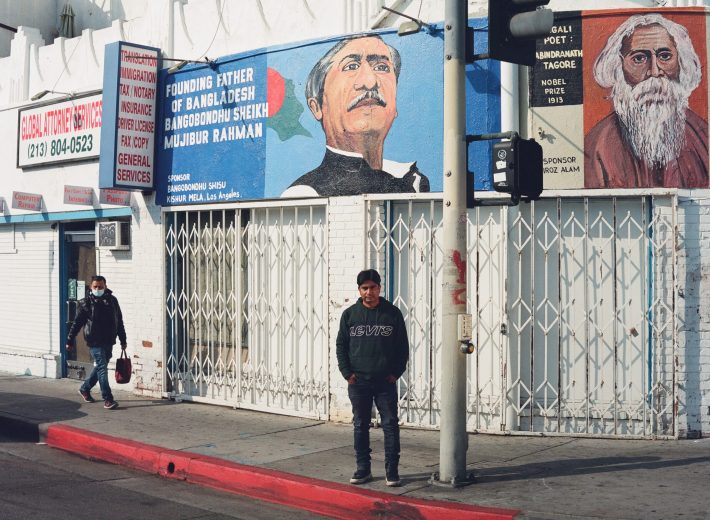
Firoz Alam standing in front of The Bangladesh Academy
On 3rd Street and Hobart Avenue stands The Bangladesh Academy. Four new murals have been painted alongside the academy. The Bangladesh Academy is another institution, like The Los Angeles Islamic center, that promotes Bangladeshi culture. Above the academy is the mural of the founding father of Bangladesh, Mujibur Rahman. Alongside him is the Nobel Peace prize winner, writer, and poet Rabindranath Tagore, and next to him is the poet of Bangladesh, Kazi Nazrul Islam.
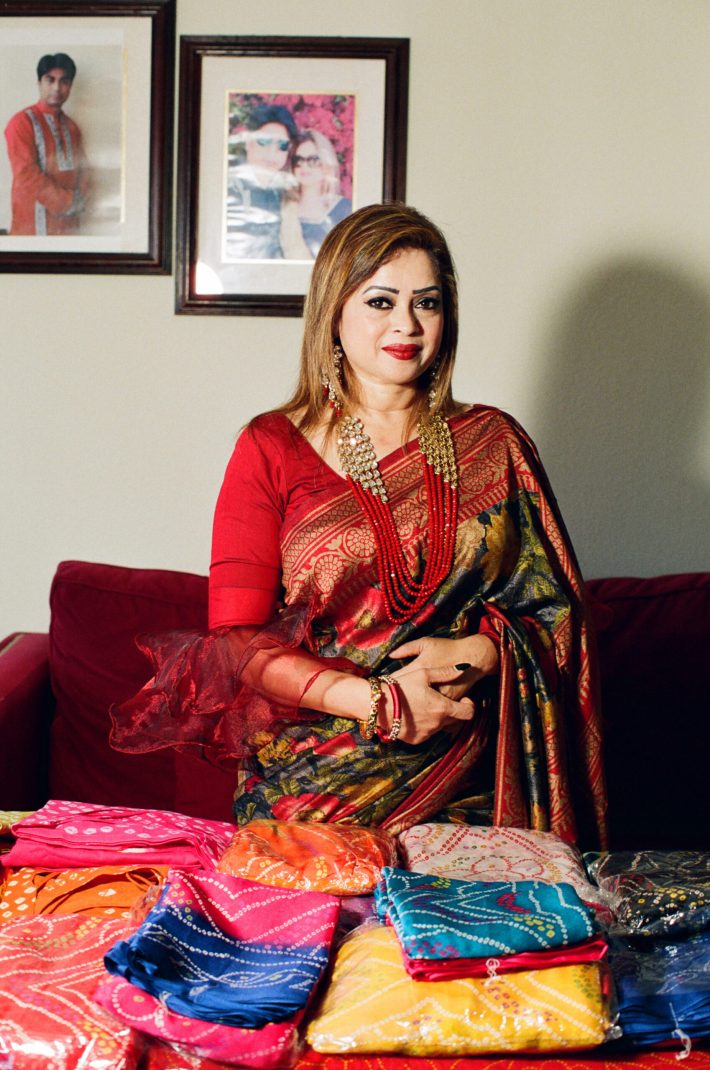
Salma Alam standing in front of her Saree collection
Salma Alam was born in Dhaka. She lives in Little Bangladesh and sells traditional Bangladeshi dresses (Saree) to the community. Before the pandemic, she would sell sarees at local events, or on Facebook and from her apartment. Customers respected her selections and the styles of sarees she purchased from Bangladesh. As one walks around the neighborhood, the vibrant colors and styles of sarees are present on the avenues and blocks of Little Bangladesh.
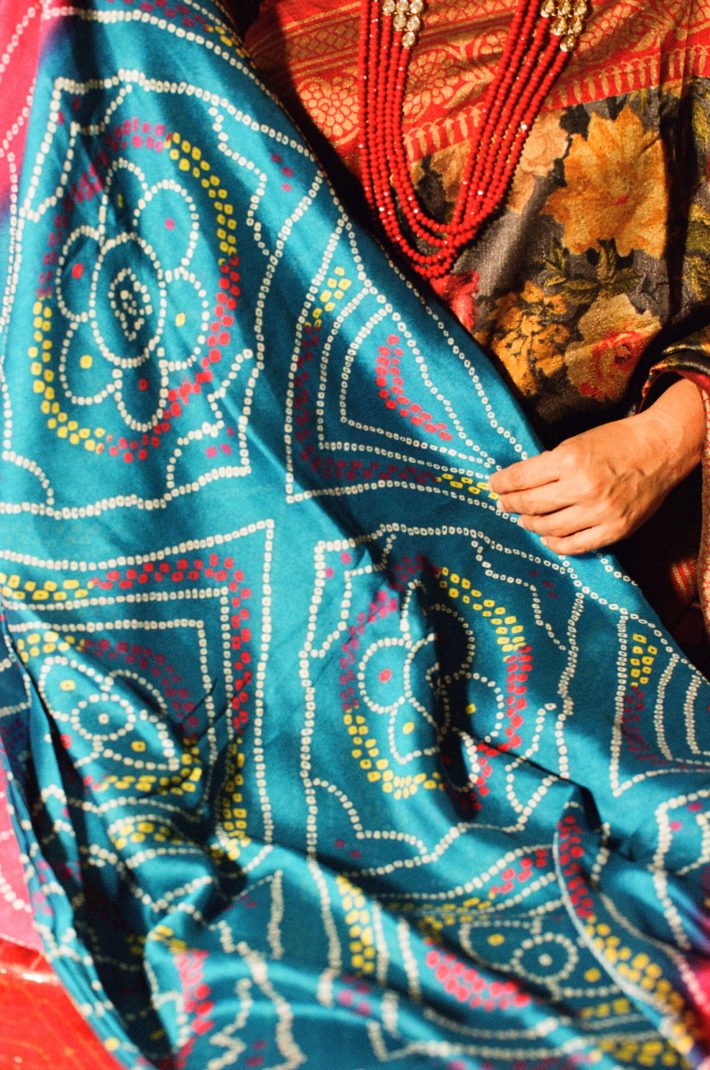
The traditional dress of Bangladesh ( Saree)
The progression of Little Bangladesh is apparent throughout the neighborhood. Community leaders acknowledge and recognize their culture and are making a strong effort to highlight it throughout the community. As future generations are born in L.A., people like Quazi Huda want to make sure there is an awareness of Bangladeshi history and culture as the community navigates and adapts to life in a new country and culture. Mr. Huda explains, “We want to be real Americans with a background of Bangladesh.” Despite the imminent threat of gentrification and displacement that looms in all neighborhoods in Los Angeles that double as cultural strongholds, the murals in Little Bangladesh are a vibrant reminder of the power of community to represent their country, cultures, and people.
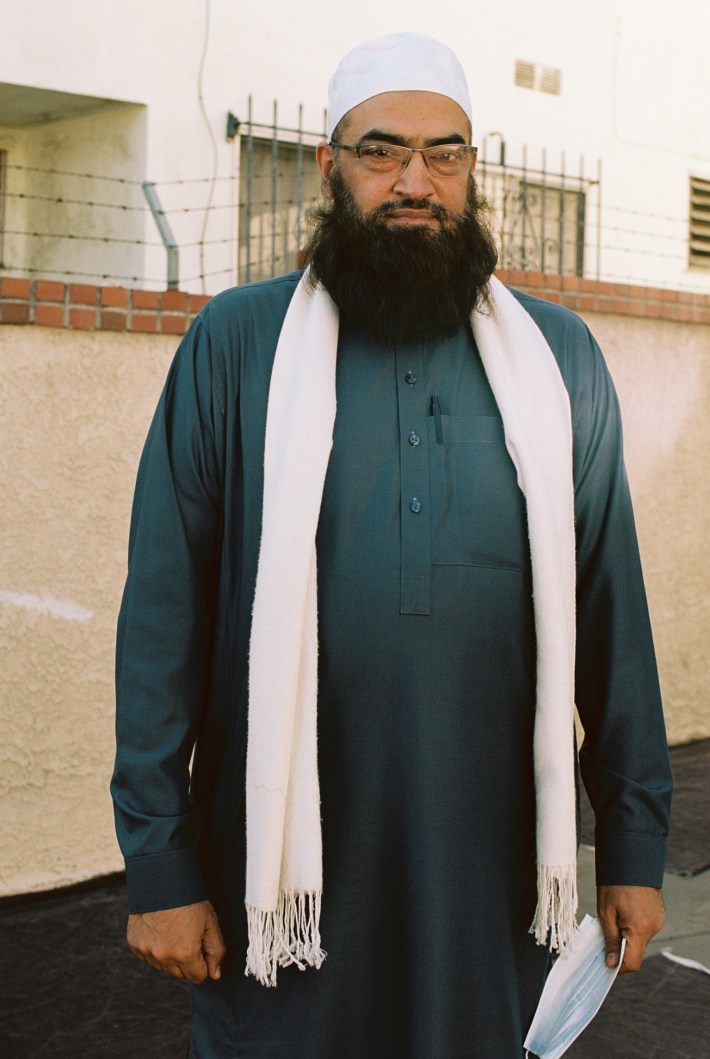
The Imam of The Los Angeles Islamic Center.
Text by Sean Maung
Photos by Sean Maung and Taz Essa
Video by Pete Dandrea