Like many spirits, tequila is more than just a liquor category. It’s a centuries-old cultural drink that embodies centuries of Mexican history, social issues, and tradition.
Agave tells the story of the people, their soil, their worldview, and their philosophy. When we talk about tequila, we’re talking about Mexico. Supporting Mexican brands is more important than ever, as they compete with an ever-growing number of agave spirits made from agave varieties grown around the world.
The question of where agave plants come from matters, especially at times when terms like “biopiracy” and “cultural appropriation” are met with a certain amount of mistrust, as if they were to be feared or left out of discussion completely.
Given the exponential growth of the agave spirits market, even right now, as more people are drinking less, agave spirits have survived the recent sobriety trends. Many countries are trying to cash in on this agave anomaly despite lacking the historical and cultural background that agave spirits traditionally embody.
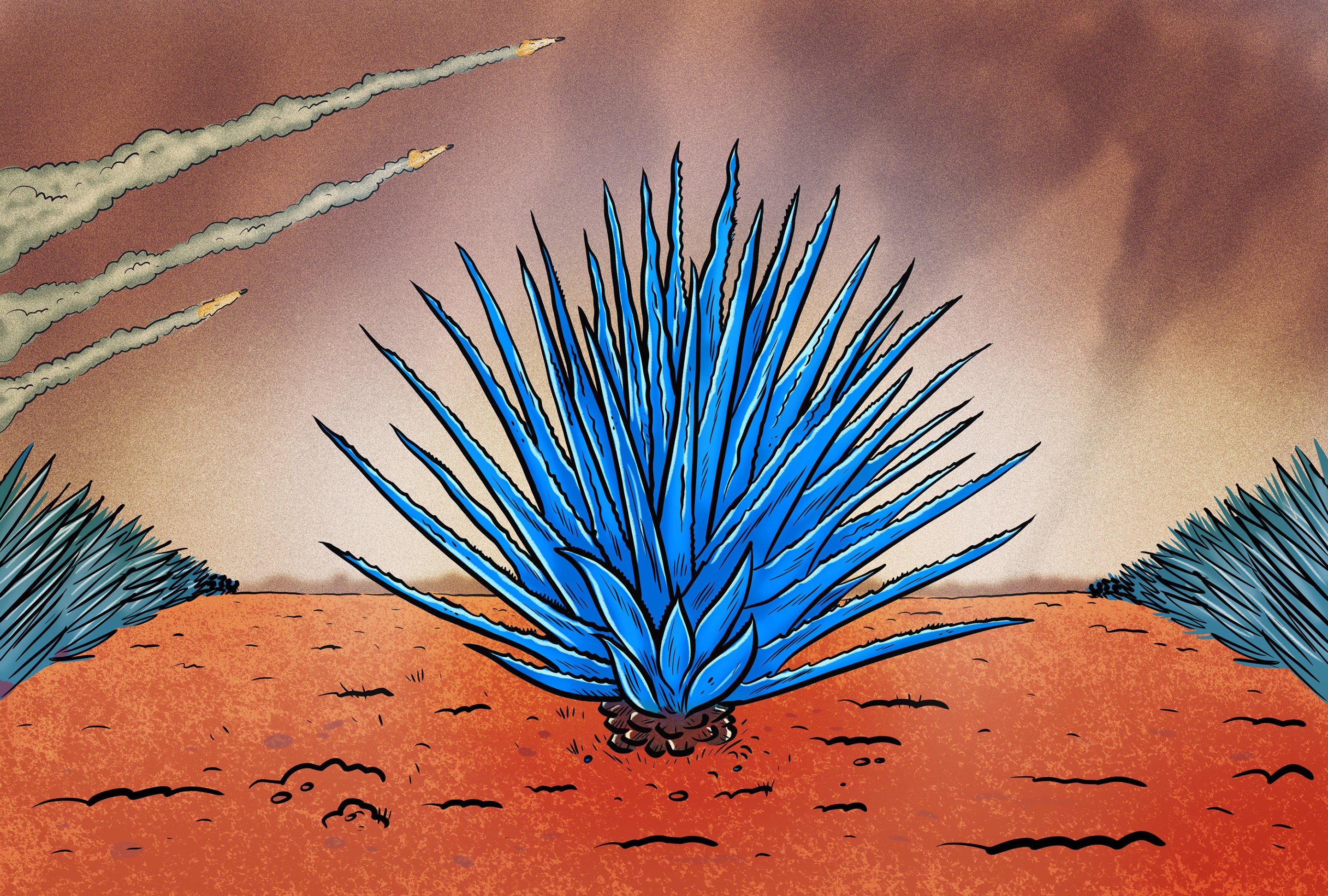
Over the past seven years, Israeli entrepreneurs have visualised the growth of agave plants in the Kibbutz Alumim.
Building an advisory team of top tequila experts was essential to delivering the Mexican expertise to develop what is called Negave Spirits, the Israeli company producing this tequila-like spirit.
The Times of Israel reported in 2024 that one of Negave Spirits' co-founders, Avi Leitner, is "planning on conquering the local market with the 'young and sexy' spirit but hopes to also export it."

Key Questions Arising From This Project
Where is the agave coming from?
Who in Mexico would dare to take on this project while the International Court of Justice had labeled Israel's actions against Gaza a genocide?
Have they taken other endemic crops from Mexican soil?
"Tequila is now the fastest-growing spirit in the world,” Fitz Haney, former U.S. Ambassador for Costa Rica and one of the founders of Negave, said in an interview.
International aspirations to profit from agave are nothing new. But since the ICJ urged nations to “do their utmost to prevent Israel from carrying out its plan for the complete occupation and potential annexation of the Gaza Strip and to refrain from rendering any aid or assistance,” it’s natural to wonder who would agree to travel to Israel and to carry on with this project.
Ever since launching their PR coverage, Negave speaks proudly in celebrating the work of their Mexican panel, so that the company could copy the process as closely as possible.
They hired Maestra Tequilera Ana Maria Romero Mena, whom you may know for her work with brands like Mijenta Tequila and Volcan de Mi Tierra. As a master distiller, Ana Maria has publicly shown her ongoing support for Israel and her role as a leader for Negave on social media.

The Mexican team involved in Negave includes Dr. Ana Valenzuela (an horticultural expert on agaves) and Jaime Aceves (CEO of Casa Aceves and part of the advisory board of Negave Mexico), and smaller companies from Guanajuato that apparently specialize in agave consulting. A project like this could never have seen the light of day without Mexican knowledge or expertise.
“Our journey begins in Mexico with the selection and harvesting of 100-percent-pure lowland Blue Weber agave grown near the volcano—never rushed and harvested to ripened perfection,” Negave’s website reads.
Other members from Negave include Amanda Parness, David Polinsky, Avi Leitner, and Avi Rosenfeld, the latter two are co-founders of the Blue Agave Group, or as they label it, “the first blue agave of the holy land.”
Leitner clarifies that they were only allowed to import agave tissue in an interview with The Jewish Star.
“We were bringing these plants in, and we did not know if there were insects, wild animals, or bacteria in Israel that the plants weren’t immune to,” he says.
“We are Zionists and pro-Israel. We want to turn the Negev green, and this looked like a way to do so,” Leitner said in the same interview.
David Niewood, who is listed online as the founder, CEO, and chairman of Negave Estates, apparently operates the company from Israel.
“Negave Estates will create . . . one of the finest agave-based spirits that will rival the world's best Tequila,” Niewood writes on his LinkedIn page. “The fastest growing segment in the global spirits industry, with a terroir unique to Israel's Negev Desert. Our spirit will be 100% Authentic; 100% Organic; 100% Pure; 100% Artisinal [sic]; 100% Regenerative and 100% created in Israel's Negev desert.”
Beyond ethical or even legal questions, tequila is Mexico’s proudest product, an industry valued at $10.53 billion in U.S. dollars in 2023 and projected to reach $19.73 billion in four years. Yet the production cost for an artisanal brand can be around $5 per bottle, while tequilas on the market range from $14 to $30 per bottle.
These statistics beg the question: How much does the producer get to keep?
How is it possible that jimadores get paid one peso per hijuelo removed from the soil compared to the millions made by the big brands? (Hijuelos are little clones that sprout from the base of a mature agave plant through its root system, carrying the same genetic information as the mother plant.)
Just as with all celebrity-owned brands, we, as consumers, should diligently question who is behind the products we consume: their sustainable practices, what they give back to the community, and, most importantly, their empathy for the culture they profit from.
Getting to know the stories of authentic mezcal artisans and acknowledging the hard work put into each bottle is crucial. Next time you buy a margarita or a bottle of tequila, you may unknowingly be supporting Israel's endeavors thanks to the work of Mexican hands.
Editor's note: Editor's note: A section of this story was removed on Sunday, March 22, due to inaccuracy.